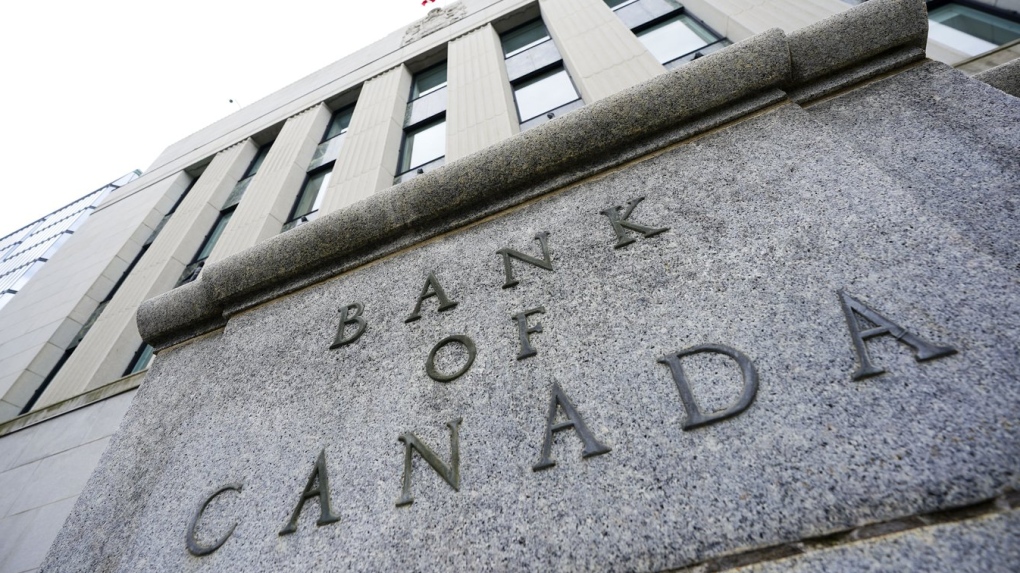
The Bank of Canada kept its key interest rate unchanged at 2.25 per cent on Wednesday, marking its fifth straight hold as policymakers weigh weaker economic growth against renewed inflation pressure tied to global energy prices and geopolitical uncertainty.
The decision, widely expected by economists, leaves the central bank in a cautious position as Canada faces softer domestic demand, uncertainty around U.S. trade policy and higher oil prices linked to the war in Iran.
Bank of Canada governor Tiff Macklem said the economy performed worse than expected in the first quarter, while inflation has moved higher since the central bank’s April forecast.
“Against this backdrop, the Canadian economy has remained soft and inflation has increased,” Macklem said.
Inflation Expected To Stay Near Three Per Cent
Annual inflation climbed to 2.8 per cent in April, partly due to the global energy shock. The Bank of Canada now expects inflation to stay near three per cent in the coming months before moving back toward its two per cent target.
Macklem said the central bank has seen “limited evidence” so far that higher energy costs are spreading into broader price pressures.
He said the Bank of Canada will look through the short-term inflation increase caused by the oil price shock, while remaining ready to act if price pressures become more persistent.
The central bank’s mandate focuses on controlling inflation, but it also factors in economic weakness as households and businesses face pressure from higher costs, trade uncertainty and slower activity.
Macklem Says Rate Hold Balances Risks
Macklem said the Bank of Canada faces a difficult tradeoff. Higher rates would help cool inflation but risk adding more strain to an already soft economy. Lower rates would support growth but raise the danger that inflation stays elevated.
“Raising rates to dampen inflation could further slow the economy. Easing rates to support growth increases the risk that higher inflation becomes persistent,” he said.
“For now, holding the policy rate unchanged balances those risks.”
Canada’s Economy Shows Signs Of Strain
Statistics Canada reported real gross domestic product declined at an annualized rate of 0.1 per cent in the first quarter, following a 1.0 per cent drop in the fourth quarter of 2025.
The back-to-back declines have sparked debate over whether Canada has entered a recession, though several economists have argued the contractions remain too modest to meet that threshold.
Macklem said recent data, including a strong May jobs report, suggests the economy might rebound in the second quarter. He added that while the labour market has been volatile, employment has been fairly flat so far in 2026.
The Bank of Canada’s next moves will depend on whether inflation pressures broaden, energy prices remain elevated and economic growth shows a sustained recovery.