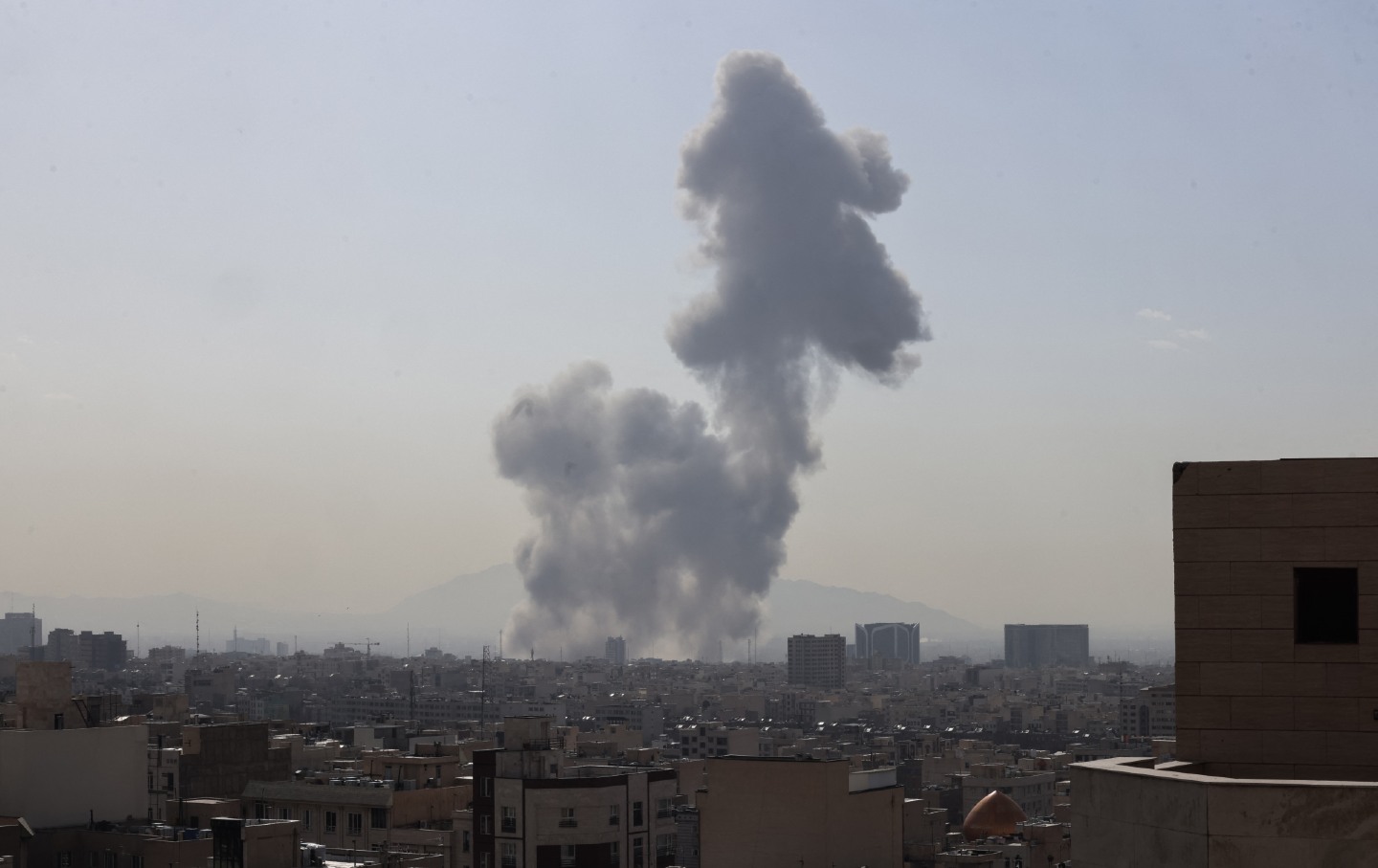
U.S. President Donald Trump said Wednesday the ceasefire agreement with Iran is “over,” deepening fears of a wider Middle East conflict after Washington and Tehran exchanged fresh strikes overnight following attacks on oil tankers in the Strait of Hormuz.
Speaking to reporters at the NATO summit in Ankara, Turkey, Trump said he no longer wanted to deal with Tehran, even as he acknowledged talks between negotiators from both sides could continue.
“I don’t want to deal with them anymore, they’re scum,” Trump said. “They’re sick people, they’re led by sick people… As far as I’m concerned, it’s over.”
Trump added that negotiators could keep talking, but dismissed the effort. “I think they’re wasting their time,” he said.
The comments marked a sharp break from last month’s 14-page memorandum of understanding between Tehran and Washington. The agreement was aimed at extending the ceasefire and ending the conflict “on all fronts.”
US Strikes Iran After Tanker Attacks In Strait Of Hormuz
The latest escalation began late Tuesday, when the United States said it launched strikes against more than 80 Iranian targets after three oil tankers were attacked in the Strait of Hormuz.
The waterway is one of the world’s most important energy shipping routes, making any military action there a major concern for global markets and Gulf security.
The targeted ships included Qatari and Saudi tankers. U.S. officials blamed Iran for the attacks, though Tehran has not directly claimed responsibility.
Washington also moved to revoke a key licence that had allowed Iran to sell crude oil and petrochemical products on international markets, adding economic pressure to the military escalation.
Iran Says It Targeted US Military Sites
Iran said it responded by targeting “85 US military installations” after American attacks on Hormozgan province and the port city of Mahshahr.
Air raid sirens were reported in Bahrain and Kuwait as regional governments assessed the scale of the Iranian drone and missile strikes. Gulf Cooperation Council countries condemned the attacks on Kuwait and Bahrain, warning that the conflict could destabilize the wider region.
Iran’s Khatam al-Anbiya military command also warned that any country supporting U.S. military action against Iran would be considered a legitimate target.
NATO Chief Defends US Action
NATO Secretary-General Mark Rutte defended Washington’s latest strikes, calling them “absolutely necessary.” He accused Iran of “basically violating the ceasefire.”
Iran’s parliamentary speaker Mohammad Bagher Ghalibaf rejected that position and said the United States had breached the truce.
The dispute left the ceasefire framework in serious doubt. The memorandum signed last month had created a 60-day window for negotiations toward a longer-term settlement, but indirect talks in Qatar had failed to produce clear progress.
Oil Prices Rise As Markets React
Trump’s remarks and the overnight strikes pushed oil prices higher and weighed on stock markets, as investors reacted to renewed instability near the Strait of Hormuz.
At the NATO summit, Trump also ordered the U.S. treasury secretary to immediately cut off all trade and commercial ties with Spain, adding another diplomatic clash to a summit already dominated by the Iran crisis.
The escalation also unfolded as the coffin of Iran’s slain supreme leader, Ayatollah Ali Khamenei, arrived in the Iraqi city of Najaf for a funeral procession.
With both sides accusing the other of breaking the ceasefire, the path back to diplomacy has narrowed. Regional governments are now watching for further attacks, while energy markets brace for more volatility if fighting continues near the Strait of Hormuz.