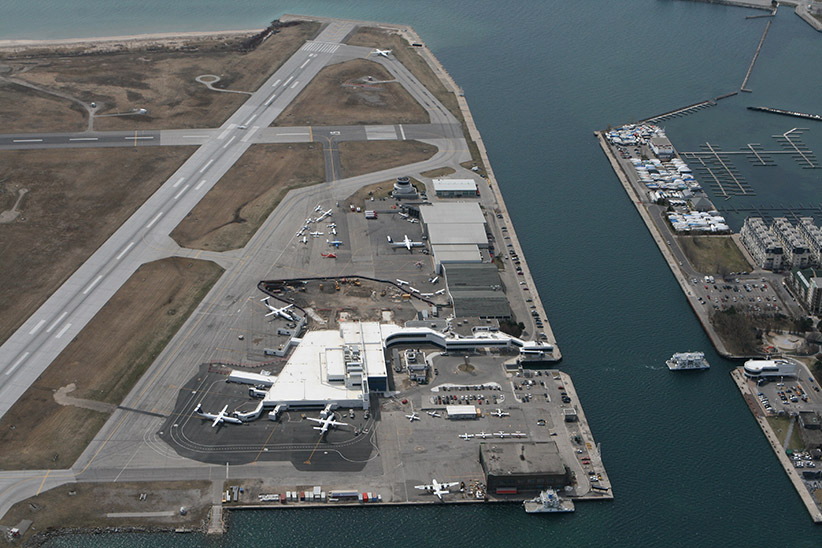
Premier Doug Ford says Ontario will move to take over Toronto’s ownership stake in Billy Bishop Airport and use sweeping powers under Bill 5 to speed up a downtown runway expansion aimed at bringing jets in and out of the island airport.
Speaking at a news conference at Billy Bishop Airport on Monday, Ford said legislation will soon be introduced to give the site special status as Ontario’s first “special economic zone,” a designation created under a controversial law passed last year. The move would let the province bypass municipal bylaws and provincial rules as it advances infrastructure work tied to the airport’s expansion.
The airport is currently governed through an agreement involving the City of Toronto, Transport Canada and the Toronto Port Authority. According to the city’s website, Toronto owns about 20 per cent of the land on which the airport sits.
Bill 5 allows cabinet to exempt selected companies or projects from complying with provincial laws, provincial regulations or municipal bylaws. Ford had earlier pointed to the Ring of Fire as a possible location for such a designation in order to accelerate mining development in northern Ontario, but that proposal drew opposition from First Nations communities and the government has since backed away from using the law there.
Ford said the province is now turning to Billy Bishop as a project tied to jobs, growth and economic competitiveness. He blamed Toronto city council for resisting the airport’s expansion and said the province would step in to move the project forward.
“They don’t want to create more jobs. They don’t want to create economic development, they don’t want to create a competitive environment and convenience for the people of Toronto,” he said. “Our plan will help Billy Bishop Airport realize its full potential.”
Ford also said the city would be compensated both for the value of its land and for any annual revenue it would lose from the airport arrangement.
Ford has repeatedly said allowing jets at Billy Bishop would create jobs and bring broader economic benefits to Toronto and the surrounding region. While the existing agreement does not flatly prohibit larger jets, current runway limits and noise-reduction standards have prevented them from operating at the airport.
As with his earlier push in the Ring of Fire, Ford cast the Billy Bishop plan as part of a larger effort to strengthen Ontario’s economy in the face of looming economic pressure from the United States.
The proposal is likely to face resistance. Many residents on the Toronto Islands have opposed Ford’s plan, raising concerns about increased noise and environmental impacts linked to airport expansion and jet traffic.
Transportation Minister Prabmeet Sarkaria said Monday the province wants construction on the runway to begin “almost immediately,” once environmental assessments are completed and consultations with First Nations have taken place.
The coming legislation will now test how far Ontario is prepared to use Bill 5 powers for urban infrastructure, and whether Billy Bishop becomes a model for future projects where the province wants to override local opposition.