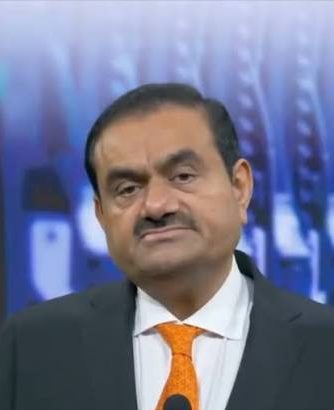
A U.S. federal judge has refused to immediately close the criminal case against Indian billionaire Gautam Adani, ordering the Department of Justice to provide a fuller explanation for its decision to abandon the prosecution, according to a Reuters report published by the Financial Post.
U.S. District Judge Nicholas Garaufis, who is overseeing the case in Brooklyn, gave prosecutors until July 13 to submit more information. Until the judge formally approves the DOJ’s request, the charges against Adani and other individual defendants remain pending before the U.S. District Court for the Eastern District of New York. Reuters reported that Garaufis declined to rule right away on Adani’s lawyers’ request to dismiss the case.
The order follows the Justice Department’s May 18 notice that it no longer intended to pursue criminal charges connected to an alleged bribery scheme in India. Prosecutors had charged Adani with securities fraud and wire fraud tied to claims involving solar power contracts.
Garaufis said the DOJ’s filing did not give the court enough detail to assess whether dismissal was warranted. He described the government’s statement as “terse, bland and conclusory,” according to Reuters.
The ruling does not mean the case will move to trial. Legal experts cited by Reuters said U.S. judges usually have limited authority to force prosecutors to continue a case they no longer want to pursue. Still, the indictment stays active unless Garaufis signs off on the dismissal.
Adani’s lawyers have argued that the case should be thrown out because it falls outside the reach of U.S. law and because prosecutors would not be able to prove the alleged bribery in India, Reuters reported.
Robert Giuffra, who represents Adani, told the court in a June 24 letter that the defence had held several meetings with DOJ officials and submitted nearly 500 pages of material outlining what it called weaknesses in the indictment.
“The DOJ’s decision reflects its careful consideration of the indictment’s legal and factual weaknesses,” Giuffra wrote.
Gautam Adani has not appeared in a U.S. court to answer the charges. Adani Group has repeatedly denied wrongdoing.
U.S. prosecutors filed the criminal case in 2024 in New York. The indictment accused Gautam Adani, his nephew Sagar Adani and other defendants of paying more than $250 million in bribes to Indian government officials to secure solar power supply contracts.
The DOJ alleged those contracts were expected to generate more than $2 billion in after-tax profits over nearly 20 years. Prosecutors also accused Adani Group-linked executives of misleading U.S. investors and global financial institutions about the group’s anti-corruption practices while raising funds through loans and bonds.
At the time, the DOJ said the charges were allegations and that the defendants were presumed innocent unless proven guilty.
The criminal case is separate from a civil case filed by the U.S. Securities and Exchange Commission. In May, the SEC moved for proposed final judgments by consent against Gautam Adani and Sagar Adani. The proposed settlement, pending court approval, requires Gautam Adani to pay a $6 million civil penalty and Sagar Adani to pay a $12 million civil penalty, without admitting or denying the SEC’s allegations.
The SEC case relates to alleged false and misleading statements linked to a 2021 bond offering by Adani Green Energy. The offering raised $750 million, including more than $175 million from U.S. investors.
Separately, Adani Enterprises Ltd. has agreed to pay $275 million to the U.S. Treasury Department’s Office of Foreign Assets Control to settle alleged violations of Iran-related sanctions. That matter is not part of the bribery case.
The next key date is July 13, when prosecutors must return to court with a clearer explanation of why they want to drop the criminal charges. Until then, the case remains legally unresolved.