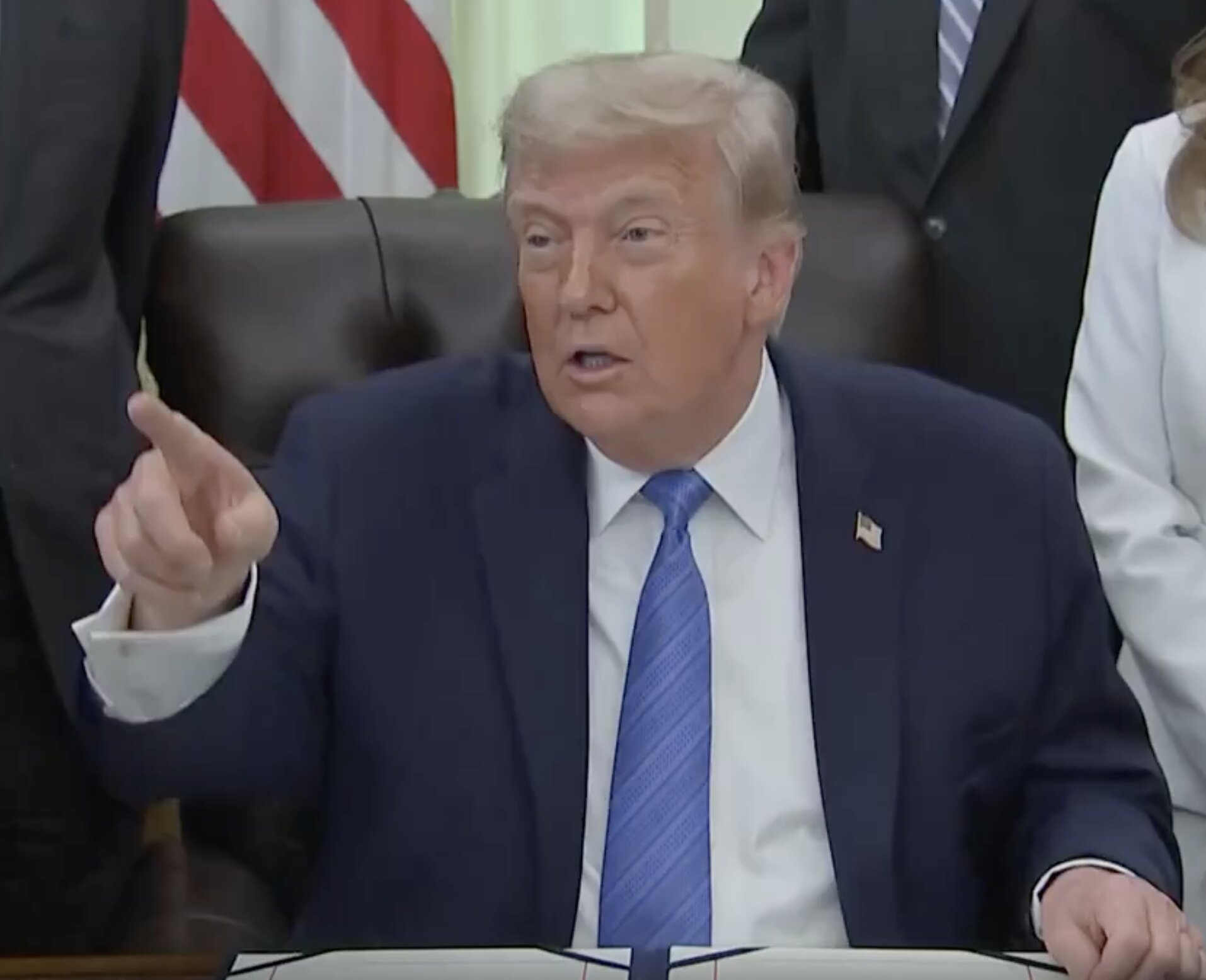
U.S. President Donald Trump has threatened to increase tariffs on Canadian goods over wildfire smoke crossing the border, arguing that the financial impact of poor air quality in the United States should be added to existing trade levies.
In a Truth Social post, Trump accused Canada of failing to manage its forests and brush while allowing dangerous smoke to move into the United States.
“We are holding Canada responsible for the fact that they are not properly maintaining their Forests, and Brush therein, and the United States is being unnecessarily invaded by filthy, polluted, and unhealthy air, the quality of which is dangerous, and totally unacceptable!” reads a post from the president on Truth Social.
Trump said the problem has become a recurring and costly burden for the United States, and argued those costs should be reflected in tariffs on Canadian products.
“This is Willful Negligence, and becoming a yearly occurrence, costing the United States Billions of Dollars, which cost of this pollution must of necessity be added to the TARIFFS Canada is currently paying.”
Trump’s comments follow similar criticism from U.S. lawmakers concerned about worsening air conditions in northern states. Earlier this week, four Michigan Republican representatives said Canada had not taken sufficient action to address wildfire smoke drifting south.
Jack Bergman, John James, Lisa McClain and John Moolenaar sent a letter titled “Canada’s Apologies Won’t Clear Michigan’s Skies.”
The lawmakers accused Canada of failing to respond with “urgency” as wildfire smoke affected air quality in recent years. They also warned that “nothing has changed except that our patience has run out.”
The intervention from Trump elevates the dispute beyond air quality and forest management by tying Canadian wildfire smoke directly to U.S. trade policy. His comments also add presidential weight to concerns already raised by Michigan representatives.
Any move to increase tariffs over wildfire smoke would deepen pressure on Canadian goods while turning a recurring cross-border environmental concern into a broader economic issue.