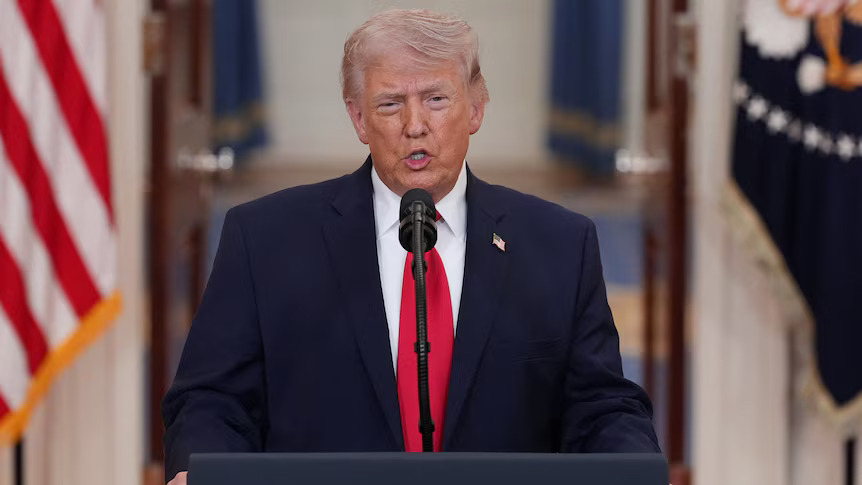
New U.S. tariffs on Canada and dozens of other trading partners took effect Friday, July 24, as President Donald Trump replaced a temporary worldwide import levy with a new tariff regime tied to forced-labour enforcement.
The United States is applying tariffs of 10% to 12.5% to imports from 60 economies, which together account for 99% of U.S. imports. Washington says the targeted countries have failed to impose or effectively enforce bans on goods produced with forced labour.
For Canada, the change does not add another 10% tariff. The new 10% duty under Section 301 of the Trade Act of 1974 replaces a temporary 10% global tariff that expired at 12:01 a.m. ET Friday. Canadian products that comply with the Canada-United States-Mexico Agreement, or CUSMA, remain exempt, as do oil and gas, fertilizer and certain other products.
Canada-U.S. Trade Minister Dominic LeBlanc said the measure was “not unexpected,” noting that Washington had already signalled plans to replace the expiring tariff. He said Canada shares the U.S. objective of preventing forced-labour goods from entering supply chains, but maintains it has one of the world’s strongest frameworks for addressing the problem.
Ottawa introduced legislation in June intended to strengthen enforcement by expanding powers to identify, detain and prohibit imports suspected of being made with forced labour.
The tariffs taking effect Friday are separate from Trump’s threatened 50% levy on selected Canadian goods. That measure, scheduled to begin Aug. 19, would cover products including wine, dairy, honey, cement, some wood products and hockey equipment—even when they comply with CUSMA. Energy, potash, fish and critical minerals are excluded.
Prime Minister Mark Carney says Canada is intensifying negotiations with Washington and that “everything’s on the table” if the 50% tariffs proceed. Desjardins estimates those duties could affect approximately $28 billion in annual Canadian exports, with Ontario, Quebec and British Columbia facing the greatest exposure.
Internationally, India and the United Kingdom received 10% rates, while most affected economies face 12.5%. Special tariff caps apply to the European Union, Taiwan, Japan, South Korea and Switzerland. Brazil has threatened retaliation and a World Trade Organization complaint, while Japan, Australia, New Zealand and Chile have also objected.
For Canadian businesses, Friday’s change largely preserves the existing baseline burden but extends tariff uncertainty as a much larger Canada-U.S. trade confrontation approaches its next deadline.