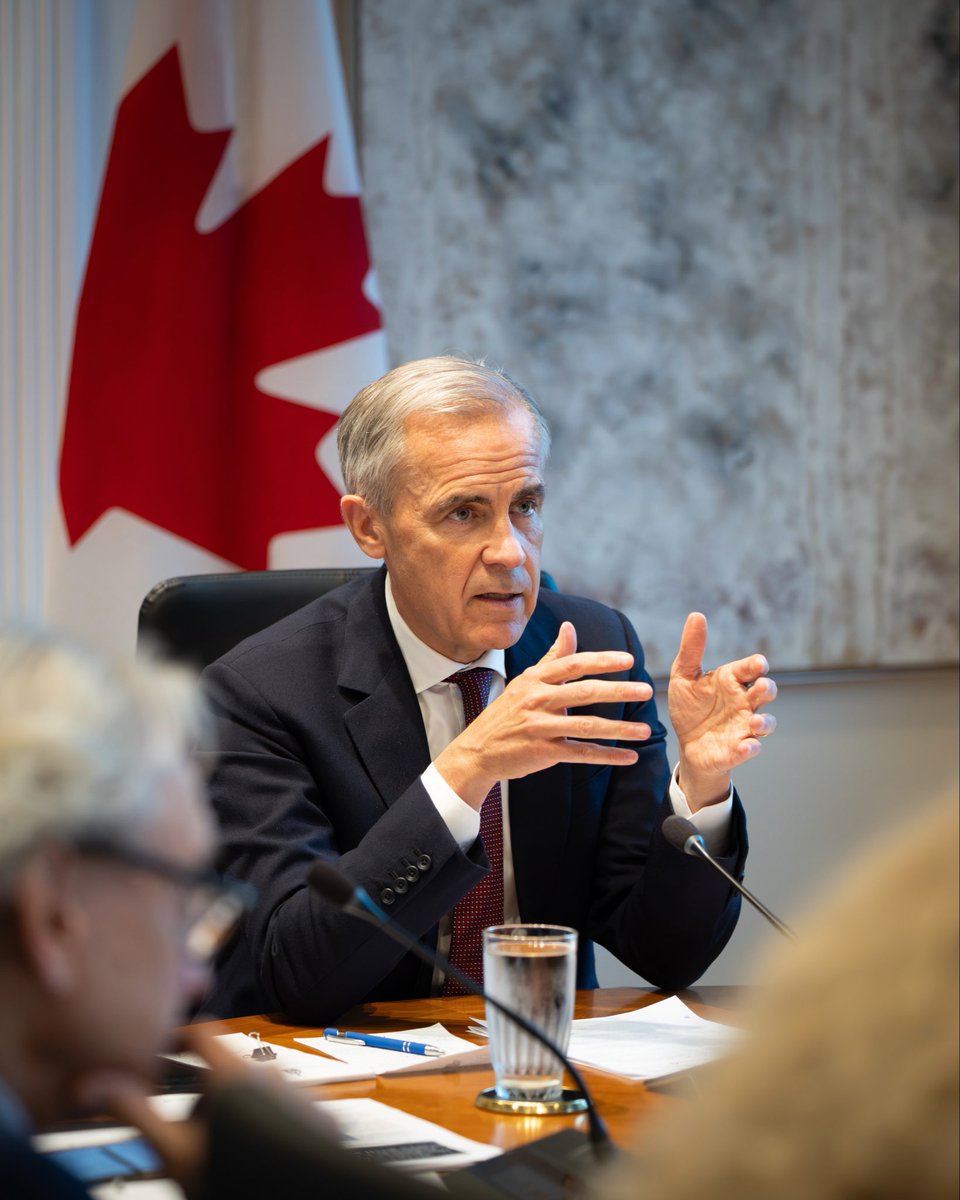
Prime Minister Mark Carney will meet Canada’s premiers in Charlottetown on Thursday as provincial and territorial leaders press Ottawa for a clear plan to confront U.S. President Donald Trump’s latest tariffs.
Trump has announced a new 50 per cent tariff on a range of Canadian goods, including cement, dairy products, alcohol, honey, furniture and hockey equipment. The measures, scheduled to take effect Aug. 19, would affect nearly $20 billion in annual exports.
Energy products, potash, fish and critical minerals would be exempt. However, some goods previously protected under the Canada-United States-Mexico Agreement, known in Canada as CUSMA, would be subject to the duties.
Prince Edward Island Premier Rob Lantz said the announcement has brought a “new level of urgency” to Thursday’s meeting.
Carney and the premiers discussed the tariffs virtually on Tuesday. Their in-person talks will focus on whether Canada can reach an agreement with Washington before the measures take effect and how the country should respond if negotiations fail.
Carney said he and Trump have agreed to intensify trade talks. He has not ruled out further Canadian countermeasures but has said his first objective is a comprehensive settlement covering disputes involving automobiles, metals and forest products.
While premiers agree Canada must defend its economic interests, they differ over tactics.
Ontario Premier Doug Ford has called for a dollar-for-dollar response. British Columbia Premier David Eby has suggested Canada could reconsider American access to critical minerals and other resources if Washington continues targeting Canadian industries.
Saskatchewan Premier Scott Moe and Alberta Premier Danielle Smith have placed greater emphasis on negotiations, warning that an escalating trade war would hurt workers and consumers on both sides of the border.
Provincial restrictions on American alcohol are also expected to be discussed. Most provinces removed or limited U.S. beer, wine and spirits in response to earlier tariffs. Carney has said those restrictions should only be lifted as part of a broader trade agreement.
The premiers will also discuss ways to make Canada less vulnerable to U.S. pressure, including reducing interprovincial trade barriers, accelerating infrastructure and energy projects, expanding overseas markets and supporting affected workers and businesses.
Nine provinces announced an agreement this week to permit direct-to-consumer alcohol sales across their borders — one example of the internal trade reforms governments say could strengthen the Canadian economy.
Despite disagreements over retaliation, the premiers have stressed the importance of presenting a united front. With less than a month before the tariffs take effect, Thursday’s meeting will test whether that political unity can produce a concrete national strategy.