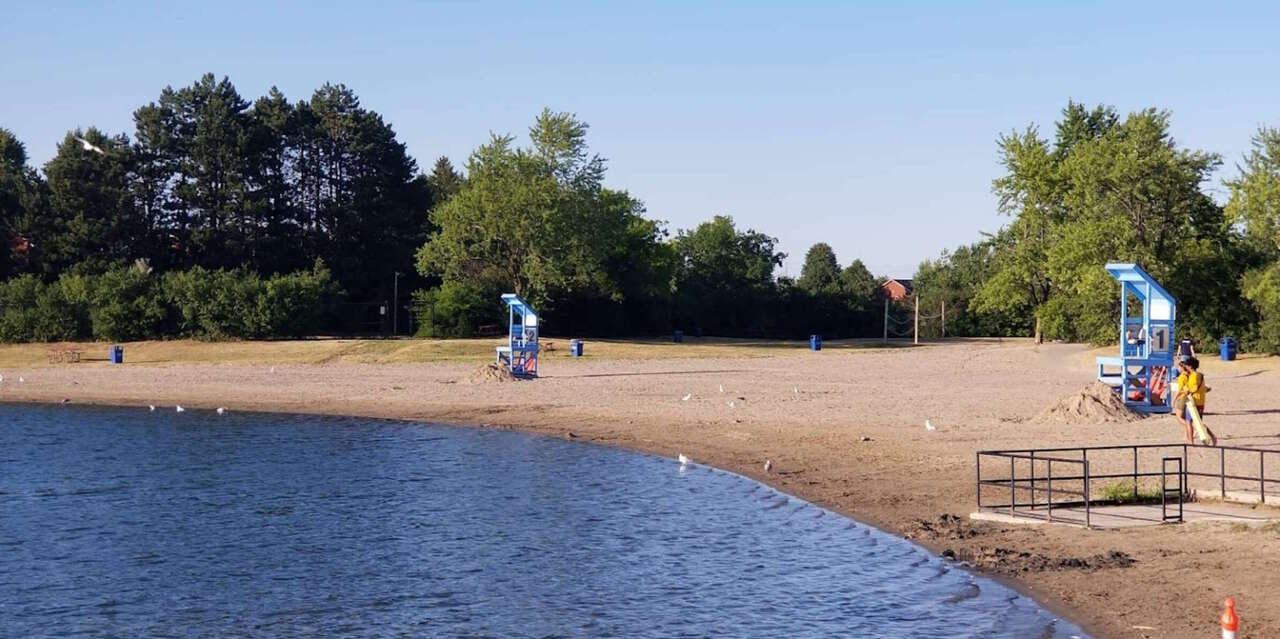
Brampton residents are being advised to stay out of the water at Professor’s Lake Beach after Peel Public Health testing found elevated bacteria levels that may pose a health risk.
The warning, issued July 10, applies to swimming at the city’s only official sandy beach. The beach area and surrounding recreational amenities remain open, but visitors should avoid entering the lake until new testing confirms safe water conditions.
Professor’s Lake Swimming Warning Remains in Effect
Located at 1660 North Park Drive near Bramalea Road, Professor’s Lake is a popular summer destination featuring a 400-foot sandy beach, lakeside trail, beach volleyball courts, a water slide and an inflatable water park.
Peel Public Health says exposure to high bacteria levels in recreational water may cause diarrhea, skin rashes, ear pain, coughing, congestion and eye irritation.
Several factors may affect water quality, including heavy rainfall, waterfowl activity, strong winds, wave movement and high swimmer volumes. Rainfall may also carry animal waste, runoff and other contaminants into lakes.
Peel Public Health Monitors Regional Beaches
Public health officials test water quality at four beaches across Peel Region from June through the swimming season. Samples are collected Monday to Friday, excluding statutory holidays.
Blue notices indicate acceptable bacteria levels and safe swimming conditions. Red warnings signal elevated bacteria levels and an increased risk of illness.
Officials also advise residents to avoid swimming for two days after heavy rainfall, even when a beach remains open.
Professor’s Lake spans 65 acres and normally offers daily beach access from 10 a.m. to 7 p.m. Residents are encouraged to review current water quality updates before visiting. Nearby swimming options include Kelso Conservation Area in Milton, Lakefront Promenade Park and Jack Darling Memorial Park in Mississauga.