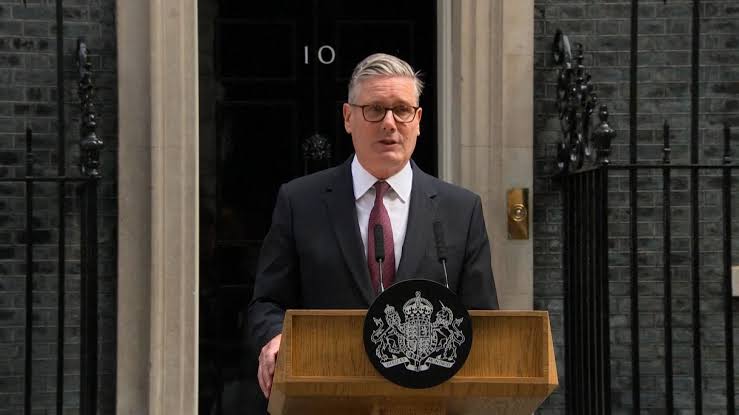
British Prime Minister Keir Starmer has announced his resignation after rising pressure from within the Labour Party, less than two years after leading Labour to a landslide victory in the 2024 general election.
Starmer, 63, made the announcement in a televised statement on Monday, setting Britain on course for another leadership change after years of political upheaval. His resignation follows poor local election results, falling public support and growing internal concern over his leadership.
The move also comes after Andy Burnham, one of Starmer’s key rivals, won a decisive by-election in North West England, giving him a parliamentary seat and a formal path toward a potential leadership bid.
Starmer’s position had weakened in recent months as Labour MPs grew uneasy over the party’s direction and public standing. Polls showed the former lawyer had become deeply unpopular with voters after a series of policy missteps and scandals.
His resignation marks a sharp reversal for a leader who entered Downing Street with one of Labour’s strongest mandates in modern British politics. In 2024, Starmer secured the party’s biggest parliamentary majority since 1997, ending 14 years of Conservative-led government.
Burnham’s by-election win added fresh pressure inside Labour, as party figures looked for a reset before Parliament returns. His victory in North West England strengthened his standing as a possible successor and intensified questions over Starmer’s authority.
Starmer’s departure places Britain on track for its sixth leader in seven years, extending a period of political instability that began after the Brexit referendum.
David Cameron resigned in 2016 after campaigning for Britain to remain in the European Union and losing the referendum. Theresa May stepped down in 2019 after repeated failures to secure parliamentary approval for her Brexit withdrawal agreement.
Boris Johnson resigned in 2022 after a wave of scandals and ministerial resignations weakened his government. Liz Truss followed him but left office after only 49 days, after market turmoil triggered by her economic plans. Rishi Sunak then left office after the Conservatives suffered a heavy defeat in the 2024 general election.
Starmer’s resignation closes a short and difficult chapter for Labour after its return to power. The party entered government with a commanding majority, but public frustration grew as political setbacks mounted.
Labour will now face a leadership transition at a sensitive moment for the country. The next leader will inherit a large parliamentary majority, but also a government under pressure to rebuild public trust, stabilize party discipline and prove Labour still has a clear mandate to govern.