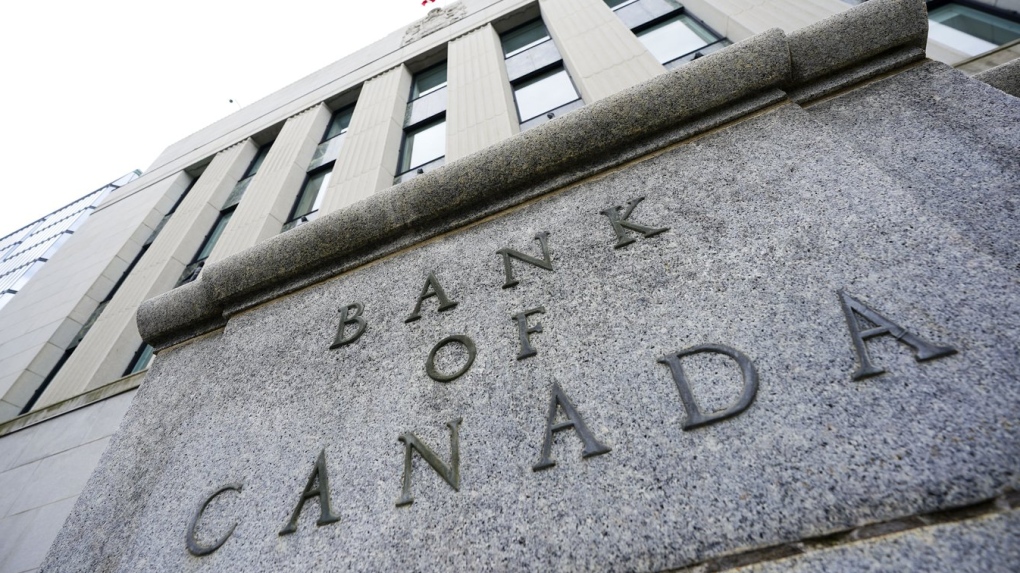
The Bank of Canada kept its key policy interest rate unchanged at 2.25 per cent for the fourth consecutive decision, while warning Canadians that inflation will rise in the near term as higher energy costs and food prices continue to strain household budgets.
In its first monetary policy report since January, the central bank said inflation is expected to climb to about three per cent in April before easing back to its two per cent target early next year.
The forecast depends on two major assumptions: U.S. tariffs remain at their current level, and oil prices fall from US$90 per barrel in the second quarter of 2026 to US$75 by mid-2027. The oil price assumption is US$15 higher than the Bank of Canada projected in its previous monetary policy report.
“After more than a year with inflation close to the two per cent target, higher global energy prices are pushing inflation up,” Bank of Canada Governor Tiff Macklem said in his opening remarks. “The surge in gasoline prices combined with still-elevated food price inflation is squeezing more Canadians.”
The bank’s review of consumer price index components shows rent and food prices remain above average, while many other price categories have returned closer to historical norms.
Macklem said the bank sees “little evidence” so far that higher oil prices are spreading into broader goods and services costs. Still, the central bank warned its outlook depends heavily on trade negotiations with the United States and developments in the war in Iran.
“Governing council agreed to look through the war’s immediate impact on inflation but if energy prices stay high, we will not let their effects become persistent inflation,” Macklem said.
The bank’s growth forecast remains close to its January outlook. Consumer spending and government spending are supporting growth, while U.S. tariffs and trade uncertainty are weighing on exports and business investment.
The Bank of Canada expects GDP to grow 1.2 per cent in 2026, then rise to 1.6 per cent in 2027 and 1.7 per cent in 2028.
“The conflict in the Middle East will affect the composition of growth, but the impact on overall growth is expected to be small because higher oil prices increase the value of our energy exports even as they squeeze consumers and many businesses.”
Macklem suggested the current rate level remains appropriate if oil prices decline as expected and U.S. tariffs stay unchanged, though he left room for future policy changes.
“If this holds true, a policy rate close to current settings looks appropriate to support adjustment in the economy and return inflation to target,” Macklem said, adding there may still need to be changes depending on how the risks evolve. “But if the economy evolves more broadly in line with the base case, changes in the policy rate can be expected to be small.”
The Bank of Canada’s next interest rate decision is scheduled for June 10. The latest monetary policy report did not include the impact of measures announced in Tuesday’s federal economic update.