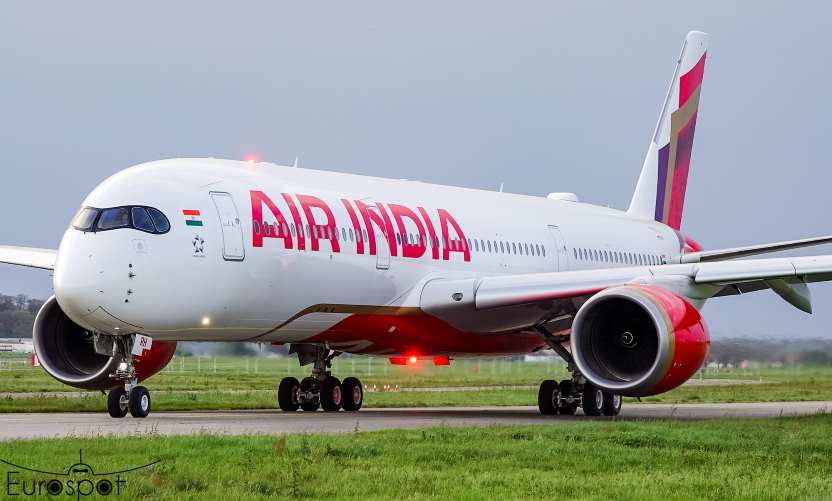
Air India will suspend or scale back service on 29 international routes through August 2026, as the airline moves to protect schedule reliability during a period of rising fuel costs, airspace restrictions and wider disruption linked to the West Asia conflict.
The temporary network changes, announced Wednesday, affect flights to North America, Europe, Australia, Southeast Asia and South Asia. Air India said the decision was taken to avoid deeper disruption for travellers and reduce the risk of last-minute cancellations across its international schedule.
“The adjustments have been made in response to a combination of factors, including continued airspace restrictions over certain regions and record high jet fuel prices for international operations, which significantly impact the commercial viability of certain planned services,” the airline said.
Air India Says Global Network Remains Strong
Air India said the cuts do not amount to a retreat from international operations. The carrier said it will still operate more than 1,200 international flights each month across five continents.
“Despite the challenges and beyond these adjustments, Air India will continue to operate more than 1200 international flights every month, retaining a robust international network that spans five continents, including 33 flights per week to North America, 47 flights per week to Europe, 57 flights per week to the UK, 08 flights per week to Australia, 158 flights per week to the Far East, Southeast Asia and SAARC regions, and 07 flights per week to Mauritius (Africa),” the airline said in statement.
The latest changes follow an earlier reduction of about 90 daily flights in May. The airline is also carrying heavy financial pressure, with estimated losses of more than Rs 22,000 crore in the last financial year.
Fuel Costs, Airspace Restrictions Pressure Airlines
Airlines worldwide have faced rising operating costs as the West Asia conflict disrupts air travel and energy markets. Tensions around the Strait of Hormuz, where nearly one-fifth of global oil supply passes, have added pressure to crude oil and aviation turbine fuel prices.
Restricted airspace in parts of West Asia has also forced carriers to use longer routes, increasing fuel burn, flight times and operational costs. Industry experts say weaker travel demand has added to the pressure on airlines already dealing with higher expenses.
Affected International Routes
North America
Delhi-Chicago: temporarily suspended
Delhi-San Francisco: reduced from 10 weekly flights to 7 weekly flights through August
Delhi-Toronto: reduced from 10 weekly flights to 5 weekly flights through July; daily operations to resume from August
Delhi-Vancouver: reduced from 7 weekly flights to 5 weekly flights
Mumbai-Newark: increased from 3 weekly flights to daily operations
Delhi-Newark: temporarily suspended
Mumbai-New York (JFK): temporarily suspended
Delhi-New York (JFK): continues as a daily service
Europe
Delhi-Paris: reduced from 14 weekly flights to 7 weekly flights
Delhi-Copenhagen: reduced from 4 weekly flights to 3 weekly flights
Delhi-Milan: reduced from 5 weekly flights to 4 weekly flights
Delhi-Vienna: reduced from 4 weekly flights to 3 weekly flights
Delhi-Zurich: reduced from 4 weekly flights to 3 weekly flights
Delhi-Rome: reduced from 4 weekly flights to 3 weekly flights
Australia
Delhi-Melbourne: reduced from 7 weekly flights to 4 weekly flights
Delhi-Sydney: reduced from 7 weekly flights to 4 weekly flights
Far East, Southeast Asia and SAARC
Delhi-Shanghai: temporarily suspended through August
Delhi-Singapore: reduced from 24 weekly flights to 14 weekly flights
Mumbai-Singapore: reduced from 14 weekly flights to 7 weekly flights
Chennai-Singapore: temporarily suspended through August
Delhi-Bangkok: reduced from 28 weekly flights to 21 weekly flights from July
Mumbai-Bangkok: reduced from 13 weekly flights to 7 weekly flights from July
Delhi-Kuala Lumpur: reduced from 10 weekly flights to 5 weekly flights
Delhi-Ho Chi Minh City: reduced from 7 weekly flights to 4 weekly flights in July and August
Delhi-Hanoi: reduced from 5 weekly flights to 4 weekly flights in July and August
Delhi-Kathmandu: reduced from 42 weekly flights to 28 weekly flights in June and further to 21 weekly flights in July and August
Delhi-Dhaka: reduced from 7 weekly flights to 4 weekly flights
Mumbai-Dhaka: temporarily suspended through August
Mumbai-Colombo: reduced from 7 weekly flights to 4 weekly flights
Delhi-Colombo: reduced from 14 weekly flights to 12 weekly flights
Delhi-Malé: temporarily suspended through August
Passenger Support and Cost-Cutting Measures
Air India said passengers affected by the schedule changes will be offered rebooking options, free date changes or full refunds.
The airline is also considering further cost-control measures, including optional meal services on domestic and short-haul international flights and possible unbundling of lounge access for some premium passengers.
The announcement follows Prime Minister Narendra Modi’s recent appeal for citizens to postpone non-essential foreign travel and use work-from-home or virtual meeting options to help conserve foreign exchange during the global crisis.