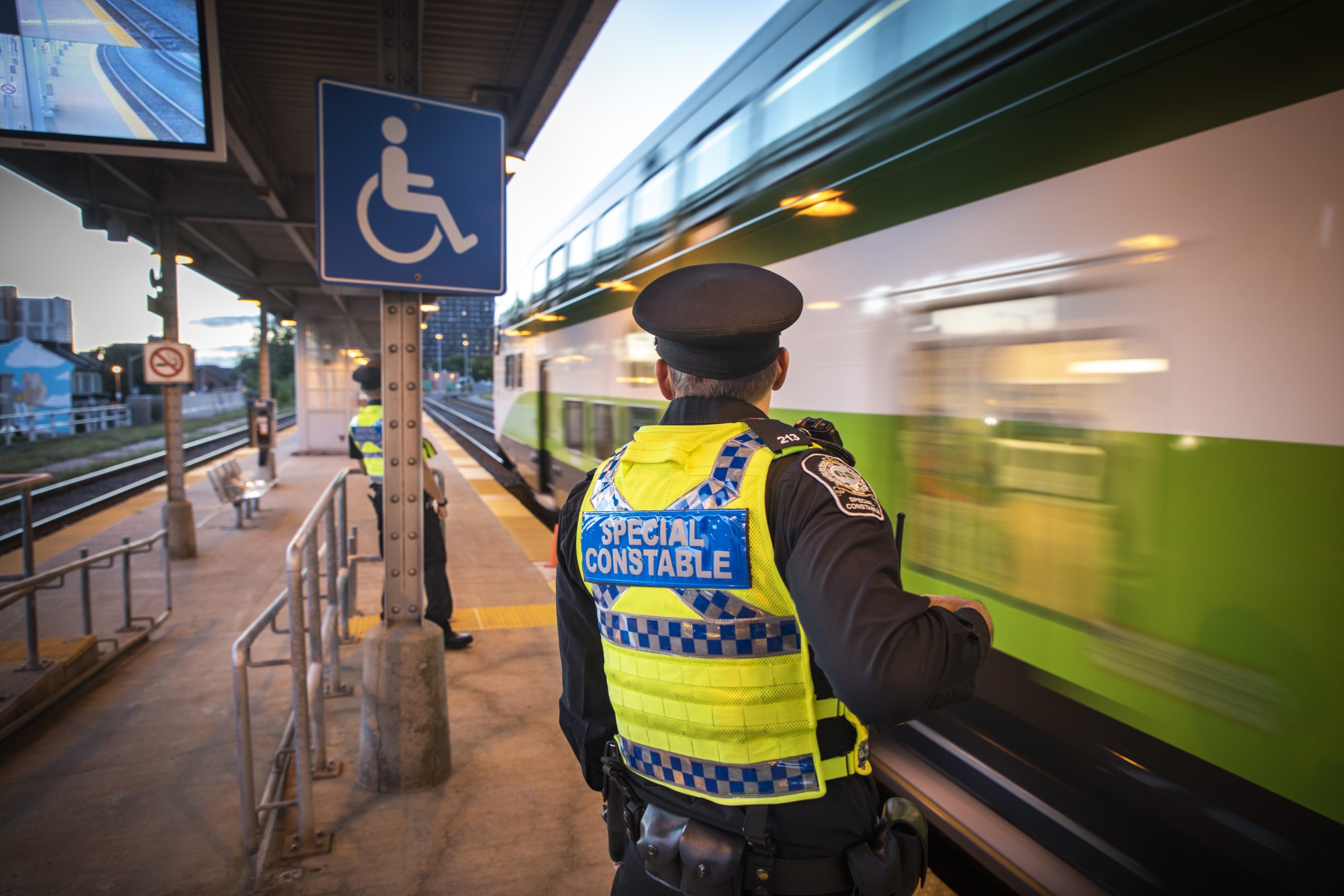
Ontario is preparing to give special transit constables broader enforcement powers as the Ford government moves to crack down on illegal drug use across public transit systems and target the production of dangerous illicit substances.
The proposed legislation would allow special constables working with Metrolinx, the TTC and OC Transpo in Ottawa to arrest people found using illegal drugs in transit spaces. The province says the change is aimed at improving safety for commuters, transit staff and families who rely on public transportation.
Solicitor General Michael Kerzner said the government wants the new powers in place by July 1 and framed the move as part of a wider public safety push.
“Come July 1, what we want to do is make sure that people know that we will be using special constables on our transit to clean up the people who are using illegal drugs. And just like last year, when we said we’re cleaning up our parks, we’re cleaning up our transit,” Solicitor General Michael Kerzner tells CityNews.
New Powers For Transit Constables
Kerzner said the bill would give special constables the regulatory authority to respond when people use illegal drugs on transit property and remove those who refuse to comply.
“Our tough on crime approach is exactly what Ontarians need, and we need it. We need it because we all have the right to wake up our kids, see them off to school, go to work, shop, play in a safe park, and worship. And we need to do this knowing that somebody has their backs.”
Illegal Drug Production Also Targeted
The legislation also takes aim at illegal drug manufacturing. It would ban the ownership, use or sale of devices such as pill presses when used to make illegal drugs. It would also make it illegal to own, produce or traffic chemicals used in drug production.
Commercial landlords who knowingly allow illegal drug production on their properties could face consequences under the bill. Police would also gain authority to shut down such operations. Retirement homes, long-term care homes, emergency shelters and premises offering homelessness prevention and support services would be exempt.
“We know that people are making illegal drugs somewhere. We know that the precursor chemicals that are being used to make fentanyl and other terrible, harmful drugs are being made, and we want to send a message to the landlords, especially the commercial landlords; Don’t knowingly close your eyes and turn away,” said Kerzner.
Safety And Civil Rights Concerns
Sarah Kennedy, president of the Ontario Special Constables Association, said the association supports the proposed change, while recognizing the increased risk officers could face.
“Law enforcement carries an inherent level of risk, which is something our members are aware of and are willing to accept, but we continue to advocate for the best, most appropriate and modern tools … for officers to be able to do their jobs safely.”
Premier Doug Ford previously backed arrest powers for transit constables, saying, “[If] someone’s using drugs or shooting up drugs on the subway, they need to be arrested and removed from the subway.”
The Canadian Civil Liberties Association has raised concerns, warning the proposed laws could lead to unreasonable searches, seizures and arbitrary detention of marginalized people. The legislation is likely to draw close attention as it moves forward, with debate expected over transit safety, enforcement powers and protections for vulnerable Ontarians.