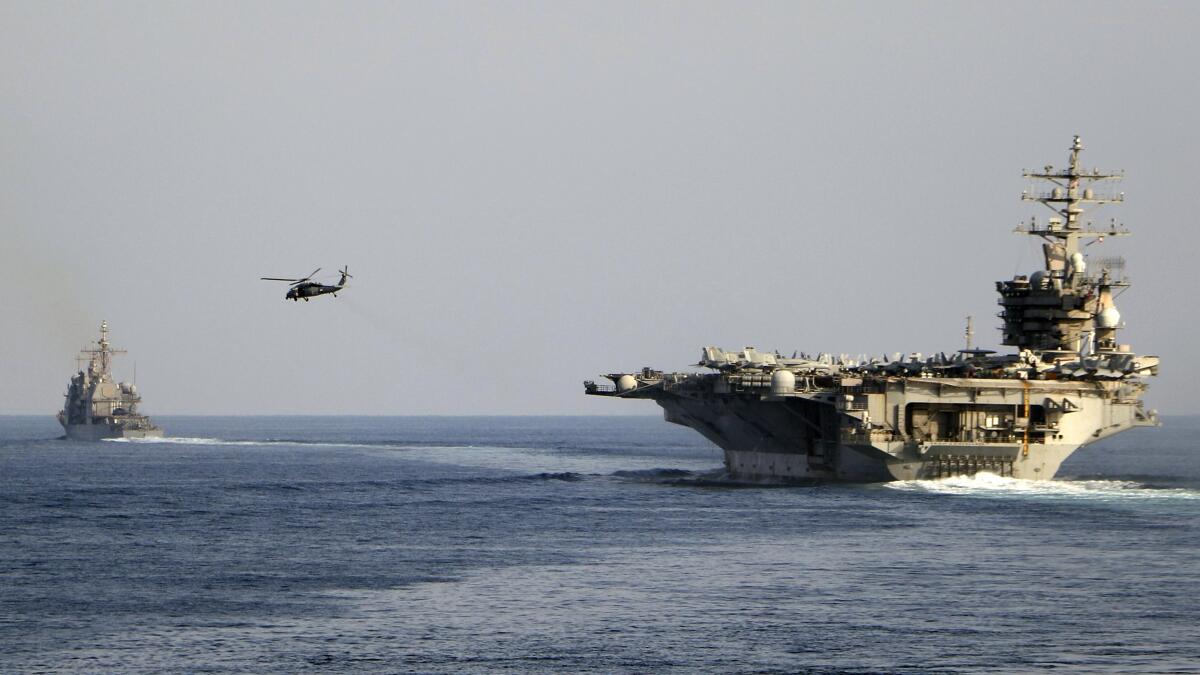
The U.S. military said Monday it would begin blockading all ships entering or leaving Iranian ports and coastal areas from 10 a.m. ET, a major escalation after weekend talks between Washington and Tehran ended without a deal. The military later clarified that vessels traveling through the Strait of Hormuz between non-Iranian ports would still be allowed to pass, narrowing earlier comments from President Donald Trump that suggested broader restrictions on the key waterway.
Iran quickly denounced the move. Its armed forces called the planned operation “piracy” and warned that the country’s ports are “either for everyone or for no one.” The confrontation added fresh pressure to a fragile ceasefire that Trump said was “holding well,” even as he dismissed the importance of Iran returning to negotiations after the failed weekend talks in Pakistan.
Shipping activity through the Strait of Hormuz slowed sharply as uncertainty spread across global markets. MarineTraffic data showed 31 vessels passed through the chokepoint in the previous 24 hours, including six carrying general cargo, oil, chemical products or liquefied petroleum gas. At 7:32 a.m. ET, 11 vessels were in the waterway, three flying the Iranian flag. Six were oil or chemical tankers and three were cargo ships. Most were listed as empty, while four were partially laden or had unknown load status. Reuters also reported that ship traffic through the strait had fallen as the blockade loomed.
Oil prices climbed back above $100 a barrel and stock futures fell as investors reacted to the threat of prolonged disruption along one of the world’s most important energy routes.
The human cost of the conflict also kept rising. Iran’s forensic chief said more than 3,000 people have been killed there since U.S.-Israeli strikes began on Feb. 28. More than 2,000 people have been killed in Lebanon, 32 in Gulf states, and 23 in Israel. Thirteen U.S. service members have been killed, while two others died of noncombat causes.